













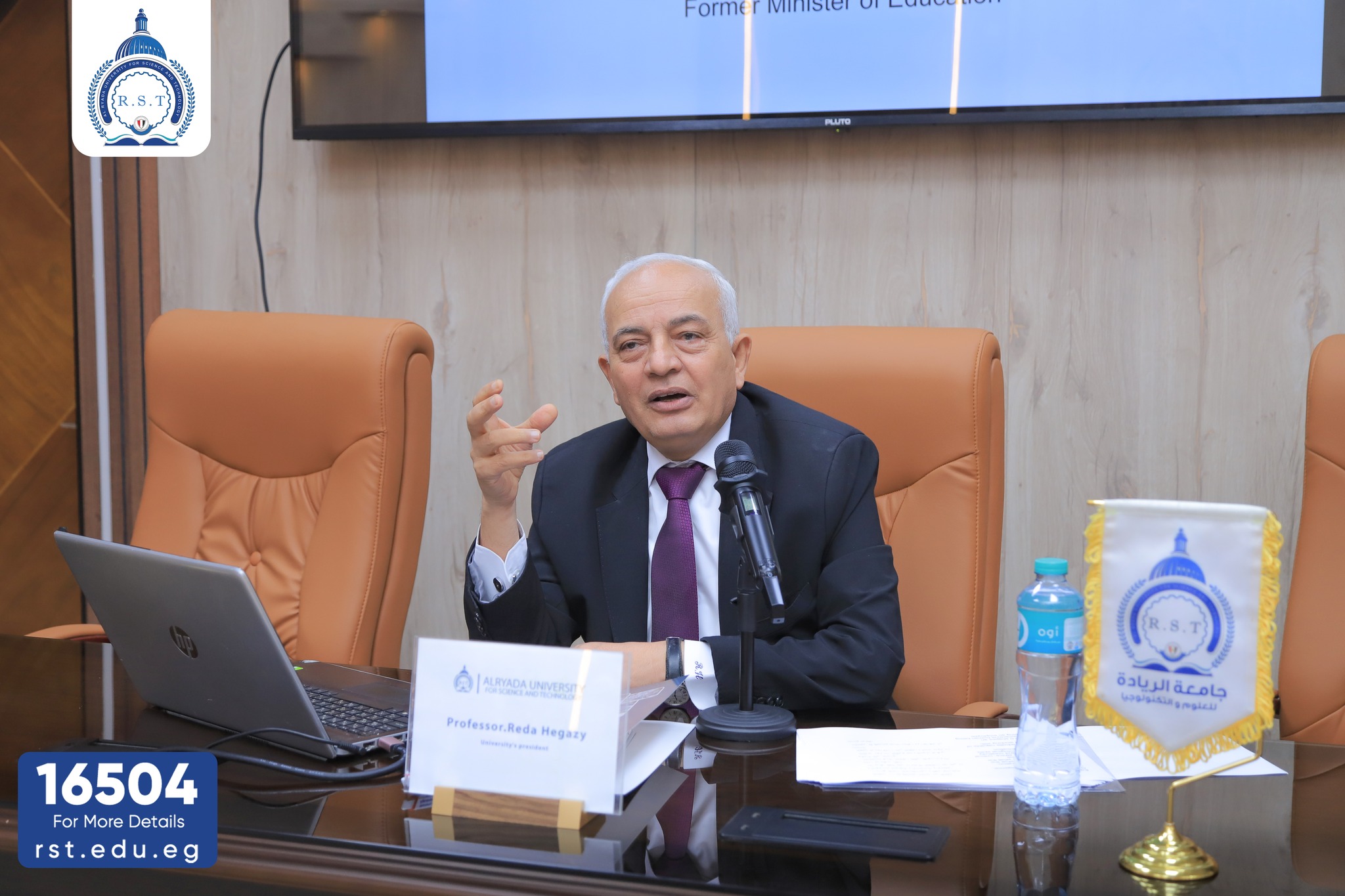
 Prof. Dr. Reda Hegazy: We Need Active Learning… Not Traditional Teaching University President Directs Adoption of Project-Based Teaching Methods
RST University of Science and Technology continues to implement programs aimed at enhancing the competencies of its faculty members, in line with the national strategy of the Ministry of Higher Education, under the patronage of Dr. Yehia Mabrouk, Chairman of the Board of Trustees, and Prof. Dr. Reda Hegazy, President of the University.
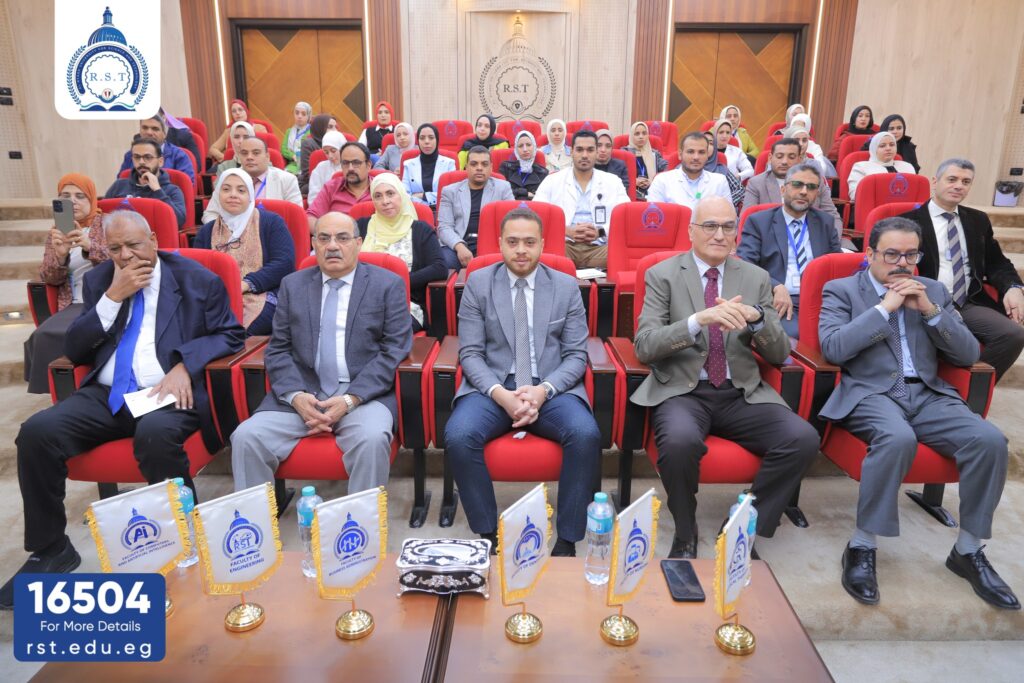
During a distinguished lecture titled “How to Make Learning Active?”, Prof. Dr. Reda Hegazy emphasized the importance of developing teaching capabilities and delivering high-quality education that keeps pace with global advancements, with a focus on innovation and entrepreneurship to prepare a generation capable of competing in both local and international labor markets.
 At the beginning of the session, the University President presented the university’s strategic goals to the faculty members, teaching assistants, vice presidents, deans, and executive leadership, which include:
Academic excellence
Enhancing scientific research to serve sustainable development
Supporting innovation and entrepreneurship
Achieving sustainability
Redesigning the educational system to align with modern digital learning requirements
In discussing modern teaching methods, Prof. Hegazy stressed that effective teaching strategies are not fixed templates; rather, they are a blend of science, creativity, and flexibility. He explained that an outstanding faculty member is one who selects the most suitable strategy based on course objectives, student characteristics, and the classroom environment.
He also highlighted the fundamental differences between traditional teaching and active learning: In traditional teaching: The teacher is a knowledge transmitter, students are passive recipients, explanations are direct, learning resources are limited, and assessments focus on memorization, resulting in shallow and short-term learning outcomes. In active learning: The faculty member facilitates learning, students are active participants, the classroom environment is interactive, learning resources are diverse, and assessments are performance- and project-based, resulting in deep and lasting learning outcomes.
The University President encouraged faculty members to adopt teaching methods that stimulate engagement, positivity, and critical thinking, while expanding the use of project-based learning, in which students implement practical projects related to the course, going through planning, execution, and evaluation stages. This approach equips students with practical experience, teamwork skills, and problem-solving abilities.
Prof. Hegazy also emphasized that learning is most effective when students interact with their peers and community, and that the educational process becomes more impactful when individual differences are considered and the learner is placed at the center of the process, increasing motivation and promoting deeper, more meaningful learning.