















Seminar Entitled “Academic Readiness, Program Accreditation, and the Development of University Regulations”
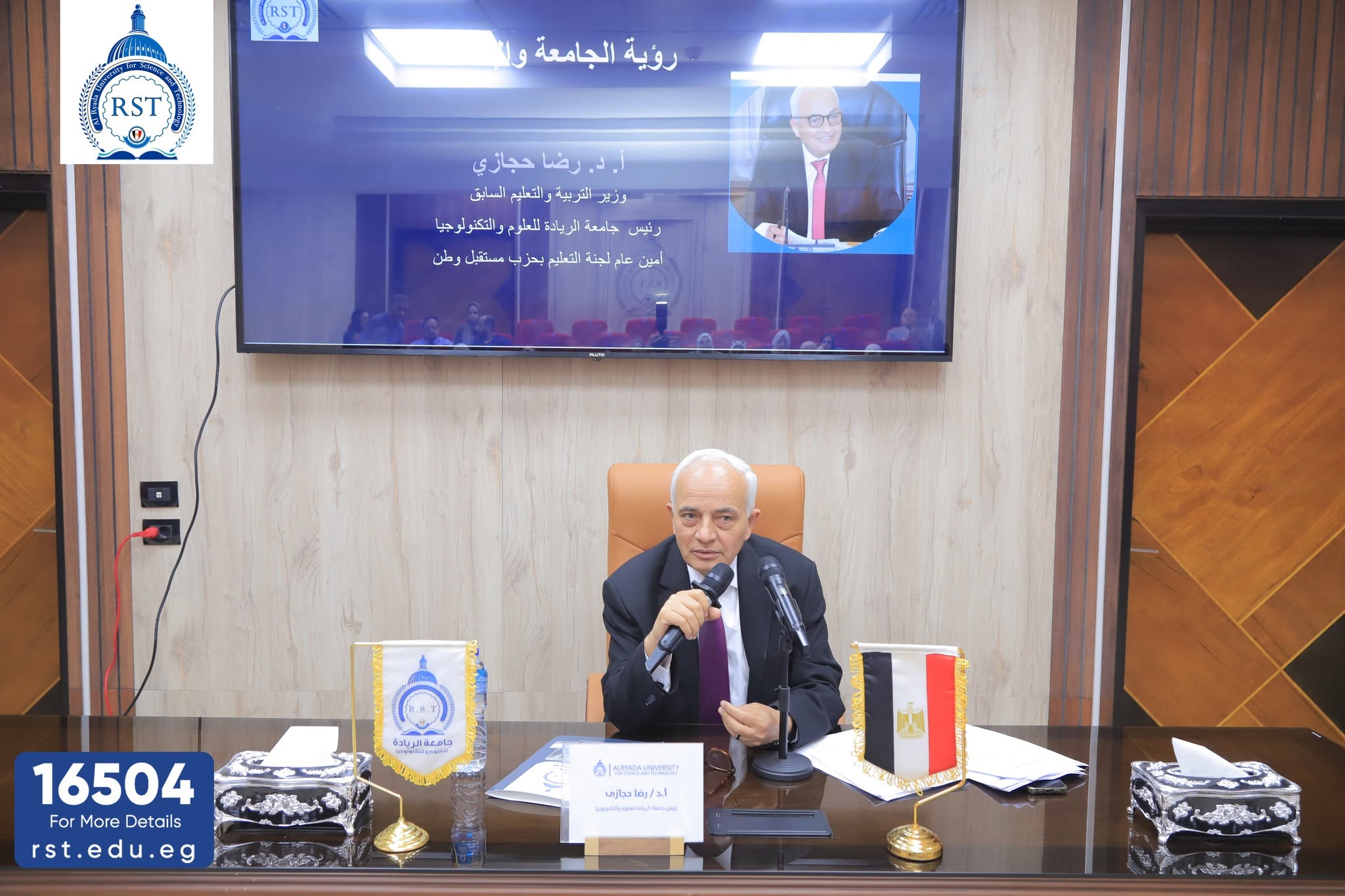
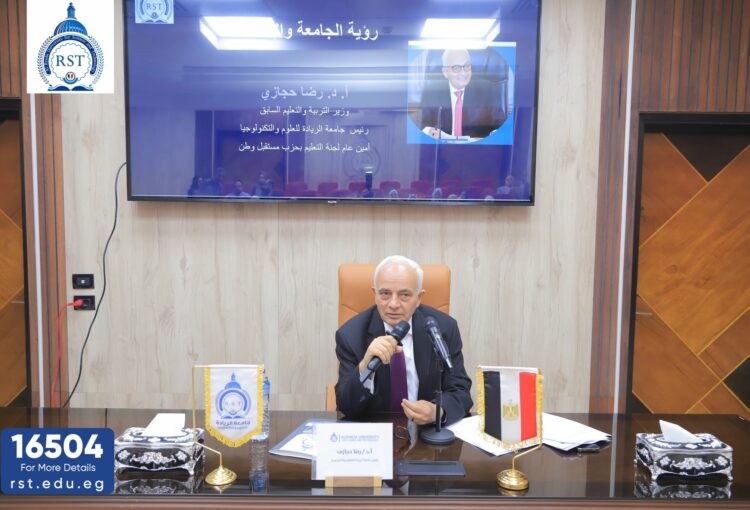
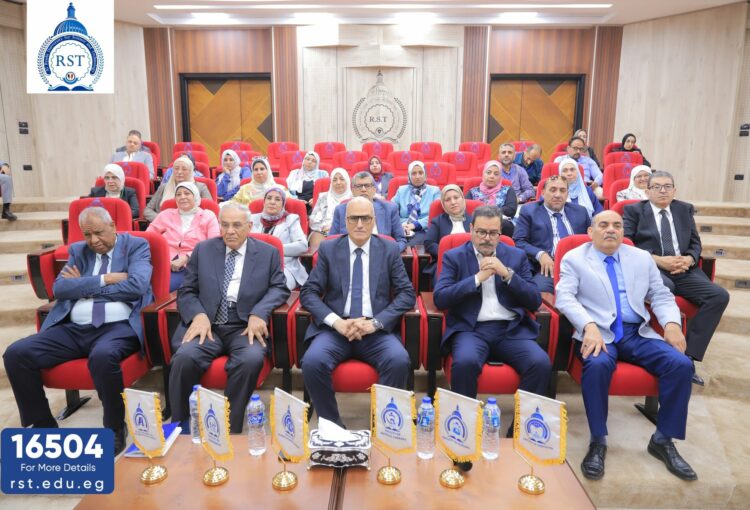
As part of Al-Ryada University for Science and Technology’s commitment to promoting modern leadership concepts and delivering an advanced educational experience that keeps pace with global transformations in higher education, and under the patronage of Dr. Yehia Mabrouk, Chairman of the Board of Trustees, and Professor Dr. Reda Hegazy, President of the University, the University’s Faculty Development Center organized a scientific seminar within its series of leadership and governance programs for higher education institutions.
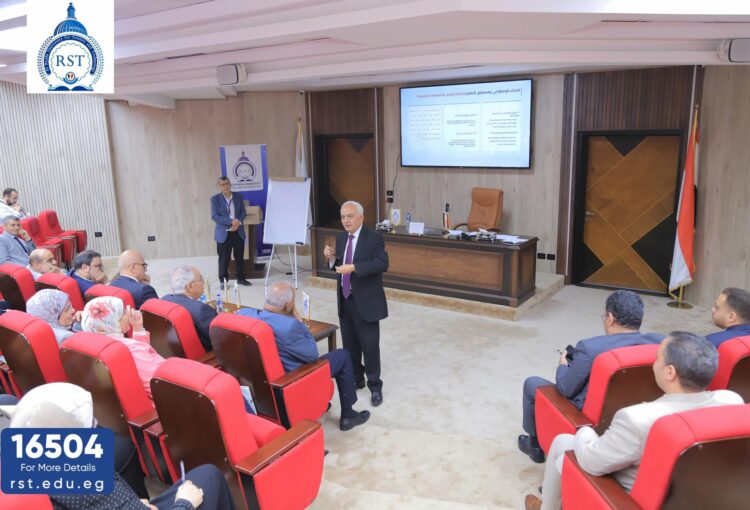
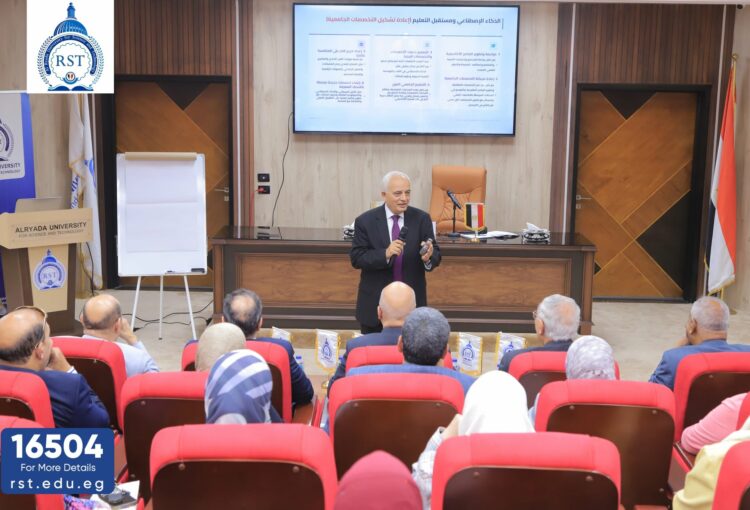
The seminar featured a distinguished lecture delivered by Professor Dr. Reda Hegazy, President of the University, entitled “Academic Readiness, Program Accreditation, and the Development of University Regulations.” The event was attended by the University’s leadership, including Professor Dr. Ehab Said, Vice President for Graduate Studies and Research; Professor Dr. Mohamed El-Sherbiny, Vice President for Education and Student Affairs; the Deans of the Faculties; faculty members; Mr. Hassan Ammar, Secretary General of the University; and Mr. Abdelrahman Yehia, Assistant Secretary General.
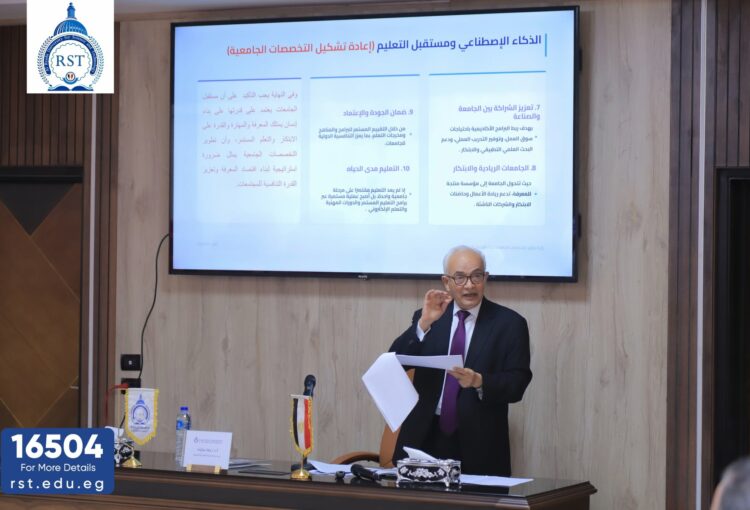
Professor Dr. Reda Hegazy emphasized that the future of higher education is directly linked to universities’ ability to develop their academic disciplines in line with contemporary changes, digital transformation, and the rapid advancement of artificial intelligence. He stressed that building a knowledge-based economy requires reshaping educational programs to become more flexible, innovative, and responsive to emerging needs.
The University President explained that universities can no longer rely solely on traditional models of knowledge delivery. Instead, they are expected to introduce interdisciplinary programs that integrate multiple fields of study, such as Artificial Intelligence in Medicine, Biomedical Engineering, and Data Science. He affirmed that Al-Ryada University continuously develops its academic regulations to align with national and international standards of quality assurance and accreditation.
He further noted that the University adopts a strategic vision centered on fostering innovation and entrepreneurship while strengthening the connection between education and the labor market. This is achieved through expanding programs related to the digital economy, including Cybersecurity, Data Analytics, and Financial Technology (FinTech), in addition to modernizing curricula through practical application and partnerships with various industrial sectors.
Professor Dr. Reda Hegazy also highlighted that academic readiness for program accreditation extends beyond curriculum development. It includes fulfilling academic standards for study programs, ensuring that course specifications align with national reference frameworks and academic standards, assessing intended learning outcomes, and providing practical and applied training that prepares graduates to compete effectively in both local and international labor markets.